

Headless CMS: Why Nigeria’s Most Forward-Thinking Businesses Are Rethinking Content Management
Strategic Intent: Introduces a modern content architecture approach to Nigerian businesses ready for a more...
Strategic Intent: Introduces a modern content architecture approach to Nigerian businesses ready for a more flexible digital content strategy.
April 25, 2026
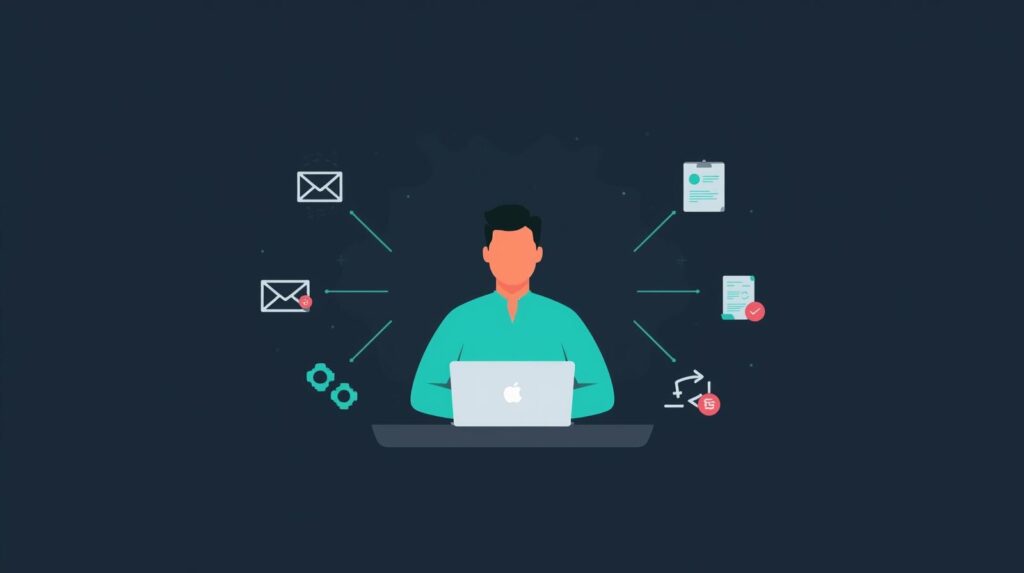
For the past decade, the dominant model for managing content on Nigerian business websites has been the traditional Content Management System a monolithic platform where the content and the presentation layer are tightly coupled, and where editorial teams manage both simultaneously. This model works well for straightforward use cases. But for Nigerian businesses with more complex digital ambitions multiple websites, mobile applications, digital signage, personalised experiences, or content that needs to reach users across multiple channels the traditional CMS architecture is becoming a constraint rather than an enabler. The headless CMS is a different architectural approach that is gaining significant adoption among Nigeria’s most digitally sophisticated businesses, and understanding why illuminates important decisions about the future of your digital content strategy.
A headless CMS separates the content management function the back-end system where editors create, organise, and publish content from the presentation layer the front-end code that determines how that content is displayed to users. In a traditional CMS, these layers are combined: the CMS manages content and renders it in a specific way, making it difficult to use the same content across different presentation contexts. In a headless CMS, the content is stored and managed in a back-end system and delivered to any front-end via an API which means the same content can be displayed on a website, a mobile app, a digital display, or any other channel, with each channel managing its own presentation independently.
The business case for a headless CMS approach is strongest for Nigerian organisations that meet one or more of the following criteria. They are managing content across multiple channels a website, a mobile app, and potentially other digital touchpoints and are currently managing that content separately in each channel, creating duplication and inconsistency. They are planning significant growth in their digital presence that a traditional monolithic CMS will struggle to accommodate without significant architecture changes. They need a development team to be able to work on the presentation layer without being constrained by the CMS’s templating system. Or they need to deliver personalised content experiences that a traditional CMS cannot support without complex and expensive customisation.
A headless CMS approach is not without trade-offs, and an honest assessment requires acknowledging them. The development complexity is higher than a traditional CMS building the front-end presentation layer independently requires more engineering investment than using a CMS’s built-in templating. Editorial teams used to traditional CMS environments may face a learning curve. And the initial setup cost is typically higher than a standard CMS implementation. For Nigerian businesses whose content strategy is relatively straightforward and whose digital presence is currently limited to a single website, a headless CMS may be more architecture than is currently needed. The question is not whether it is theoretically superior it is whether the specific ambitions of the business justify the additional investment.
E15 Technologies Limited’s Digital Engineering team helps Nigerian businesses make content architecture decisions that are appropriate to their current needs and their future ambitions not to the preferences of our development team. Our advisory process includes a clear-eyed assessment of the content strategy complexity, the channel ambitions, and the team capability of each client before recommending a CMS approach. Where a headless architecture is genuinely the right choice, we have deep experience building on modern headless platforms. Where a traditional approach is more appropriate, we build it with the same rigour. Contact our team today to discuss the content architecture that is right for your digital strategy.
Content architecture is a strategic decision that shapes every future digital investment. E15 Technologies Limited can help you make it wisely. Contact our Digital Engineering team today.
Strategic Intent: Introduces a modern content architecture approach to Nigerian businesses ready for a more...

Strategic Intent: Educates non-technical business owners on database architecture as a long-term business asset and...
Strategic Intent: Practical, honest guide to Nigerian e-commerce success, positioning E15 as the expert development...
TMR Concept is a full-service IT and media solutions provider, offering services in web design, web applications, mobile apps development, IT procurement, media setups, and more.
TMR Concept
Typically replies within minutes
Any questions related to Headless CMS: Why Nigeria’s Most Forward-Thinking Businesses Are Rethinking Content Management?
WhatsApp Us
🟢 Online | Privacy policy
Chat with us